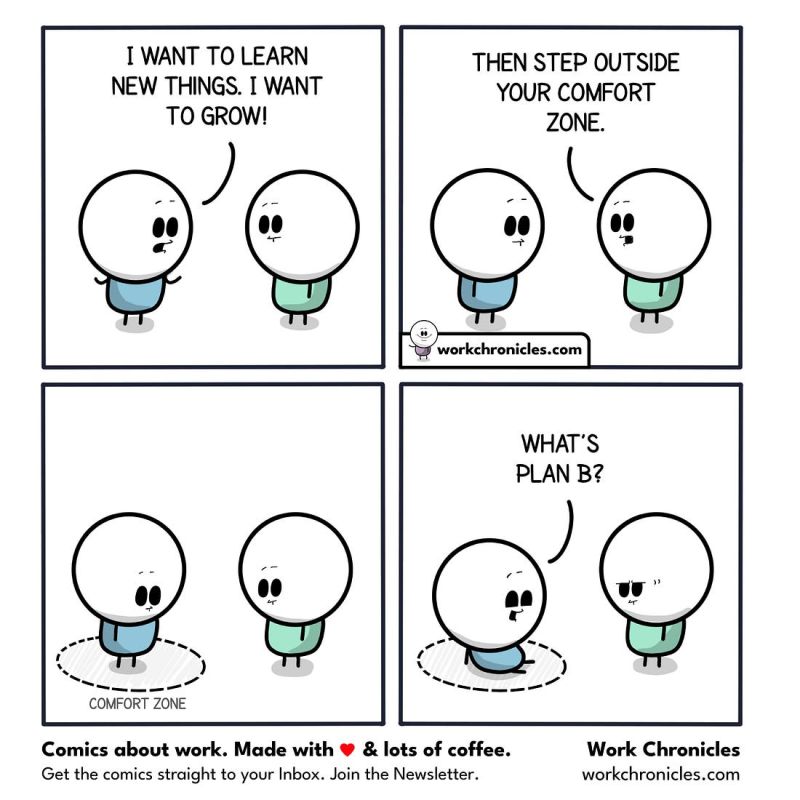
We all have comfort zones. Comfort zones with our finances, relationships, fitness, tasks we’ll take on, and many more areas if we’re honest. And this is even before we talk about the body keeping the score.
But the big question is… Are you aware of your our comfort zones? Have they crept when when you were under pressure or unwell, or even when everything was going great. What would be helpful is you knew where they start and end. And also do you know what can help you move out of them.
There is a lot of talk, quotes, and exhortations to move out of your comfort zone. I like what Helen Keller is quoted to on this:
“The place between your comfort zone and
your dream is where life takes place.”
External to your own decision to move out of your comfort zone have you noticed a trend or pattern of who/what can help you? Is it a friend or family member, a leader or a health care professional , faith or fear, and maybe you have something to add here.
So when do you move out of your comfort zone when it comes to personal development at work? My experience it us usually mid-week we’ve got a few moments to lean into learning something new, exploring with honest curiosity something a colleague mentioned, or even seeking to address a skill gap.
Have you noticed this? Does your week look like this?
- Mondays – catch up with colleagues, clear the inbox, write out the ‘to-do’s’, get cracking on tasks.
- Tuesdays and Thursdays – we get stuff done
- Fridays – we’re wrapping the week up and finishing off as much as we can before the weekend.
- And then we have Wednesdays. Oh the mid week! A little space to look beyond the priorities.
In thinking out your comfort zone I can’t move past the thought from David Epstein from his book Range:
“Learning stuff was less important than learning about oneself. Exploration is not just a whimsical luxury of education; it is a central benefit.”
Whatever it is for you. Go for it!
So how can you navigate out of your comfort zone?
Try this model.
Step 1: acknowledge you have a Comfort Zone – it is okay well all do.
Step 2: lock in 25 minutes you can be focused – I mean like really focused
Step 3: get a notebook and pens and markers out – it matters
Step 4: confirm what you want to start to learn in a new deeper way – be honest
Step 5: identify your starting point – enroll in an eLearning course, borrow/buy the book, listen to the podcast
Step 6: go for it!
Step 7: share what you’re doing and learning with colleagues
Step 8: repeat
“You can only grow if you are willing to feel awkward and uncomfortable when you try something new.”
Brian Tracy
 Andrew Mina
Leave a comment