Presence has been a theme for me this past month. Not simply physical presence, but the emotional, experienced, tangible and empowering kind.
Throughout September, I have returned time and again to the idea of presence. I have noticed it in my relationships, in my reading and in my daily practices. I’ve become more aware of the different ways we can be present — in our thoughts, our actions, our attention and simply in our willingness to be with another person.
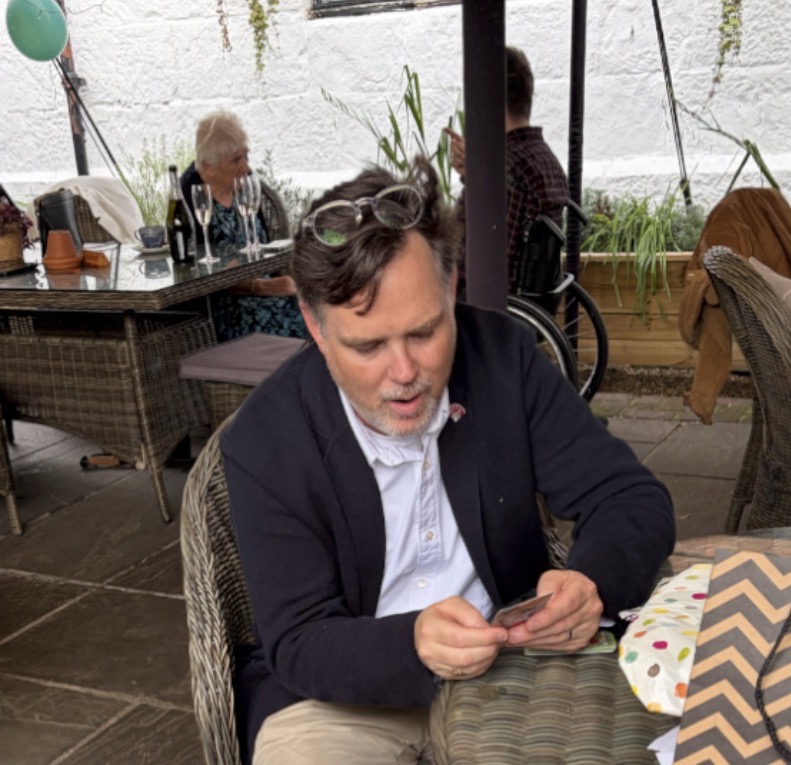
A celebration dinner, Godfather duties, conversations that spill out during a walk, the transition points in our day, sharing a meal, and even playing — and losing — a game of Teenage Mutant Ninja Turtles Top Trumps can all become opportunities for presence. (From the picture, you might think I was taking the game rather seriously!)
Perhaps presence begins by noticing that we are actually here.
Presence is more than being there
We can be physically present without being truly present.
We can sit across the table from someone while our thoughts are somewhere else. We can listen while preparing our response rather than really hearing what the other person is saying. We can be in the same room but distracted by what has happened, what needs to happen next, or what is happening somewhere else.
Being present asks something more of us.
It is giving our attention to where we are and to who we are with. It is noticing the conversation, the person, the moment. Sometimes it means putting down our phone or letting go of the list of things that still need to be done. Sometimes it simply means resisting the temptation to rush on to the next thing.
Some of the most meaningful moments of presence are not particularly remarkable. They happen around a table, during a walk, in a conversation that lasts longer than expected, or in those small spaces between one part of the day and another.
Presence begins within
Yet I am increasingly convinced that being present to others begins with being present to ourselves.
There is a temptation to avoid what is happening within us — our thoughts, feelings, emotions and needs. We keep busy, fill the silence, move on to the next thing or focus our attention elsewhere.
But if we are never willing to be present to ourselves, how can we truly be present to someone else?
For me, this also means being present with God.
Not coming to God with everything sorted or having the right words to say, but being willing to stop and notice what is actually happening within me. To sit with the thoughts and feelings that are there and allow God to meet me in that place.
David G. Benner writes about this in Sacred Companions (2002). Reflecting on the challenge of being present for others, he writes:
“One of the biggest challenges I faced in being present for others — being still within my own soul.”
He goes on to say that if he has no such still inner place, he cannot really be present for others.
That idea has stayed with me.
Perhaps being present doesn’t mean that we have everything within us resolved. It means that we are willing to remain present to ourselves rather than constantly trying to escape what we are thinking or feeling.
There is something about becoming still within ourselves that creates space for another person.
Presence is something we give
And perhaps this is where presence becomes a gift.
Someone’s presence can be brought, demanded or expected. We can be present because we have to be. We can give our time because someone has asked for it. We can even be present while wondering what we might get in return.
But I think the best kind of presence is freely given.
It isn’t necessarily about doing something for someone. In fact, sometimes presence is found in not doing anything at all.
Not fixing.
Not advising.
Not filling every silence.
Not trying to make everything better.
Simply being there.
There are moments when we don’t know what to say or what to do. We may not be able to change someone’s circumstances or take away their pain. But we can sit with them. We can listen. We can give them our attention. We can remain.
In those moments, our presence says something that our words sometimes cannot:
You don’t have to be alone in this.
Perhaps that is why presence is such a valuable gift. It doesn’t require us to have all the answers. It doesn’t depend on achievement or usefulness. It simply asks us to give something of ourselves — our attention, our time and our willingness to be with another person.
The gift of presence
Looking back over this past month, I think this is what I have been noticing.
Presence is more than simply being there. It is choosing to pay attention to the person and the moment in front of us.
Presence begins within. It asks us to become more comfortable being with ourselves, our thoughts and emotions, and for me, with God.
And presence is something we can give to others. Often in the simplest of ways.
We don’t always get to choose what happens around us. We don’t always know what someone needs. We don’t always have the right words or the ability to fix what is difficult.
But we can choose to be present.
Perhaps the invitation is simple:
Slow down. Notice. Listen. Stay.
Take care of yourself. Make space to be still. Be present with God. And then notice the small and ordinary opportunities you have to give someone else the gift of your presence.
It may be one of the most valuable things you have to offer.
Leave a Reply